

Required Documents for Shipping to Iran at a Glance
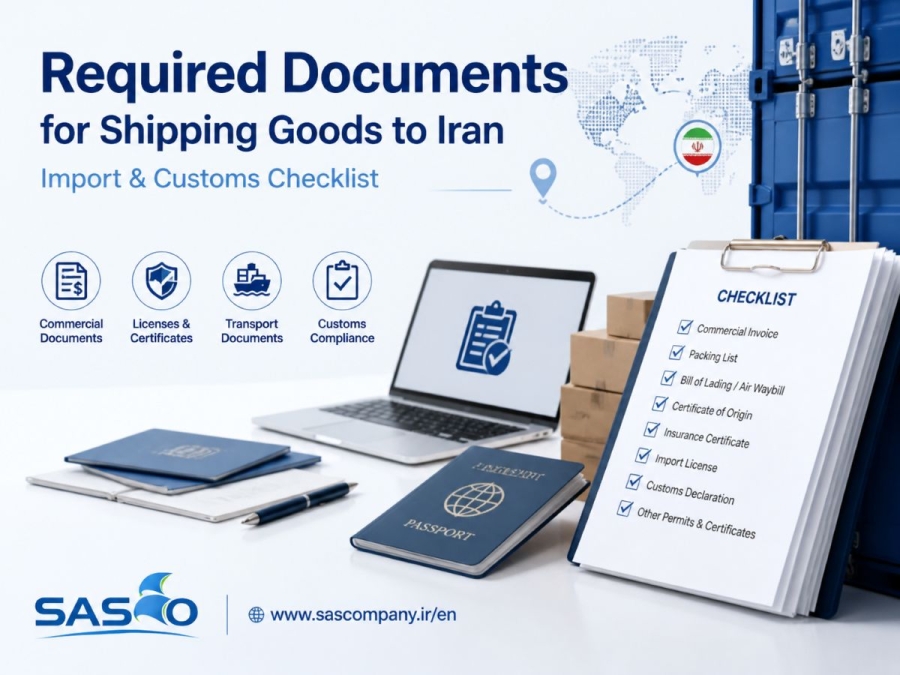
The documents required for shipping to Iran can be divided into two groups:core documents needed for most commercial shipments, and additional Iran import documents that may apply depending on the cargo type, shipment value, transport mode, or regulatory controls. The table below gives a quick checklist before the detailed explanation.
|
Usually Required for Most Shipments |
May Be Required Depending on the Shipment |
|
Commercial Invoice |
Import Order Registration / Sabt-e Sefaresh |
|
Packing List |
Inspection Certificate |
|
Bill of Lading, Air Waybill, CMR, or rail document |
Certificate of Conformity |
|
Certificate of Origin |
Health Certificate |
|
Proforma Invoice |
Phytosanitary or quarantine certificate |
|
Consignee and shipper details |
Dangerous Goods Declaration / SDS |
|
HS Code and cargo description |
Product-specific permits |
|
Insurance Certificate, if applicable |
Bank or payment-related documents |
The exact Iran shipping paperwork should be checked before dispatch, not after the cargo arrives.
Why Documentation Matters When Shipping Goods to Iran
Accurate documentation keeps shipping goods to Iran from turning into a delay problem. If the invoice, packing list, transport document, certificate of origin, HS code, or consignee details do not match, the shipment may face booking issues, document amendments, valuation questions, or slower customs clearance in Iran. For regulated goods, missing permits or inspection certificates can also hold the cargo before release.
Core Documents Required for Most Shipments to Iran
Most commercial shipments to Iran require a core set of documents that identifies the cargo, confirms its value and origin, and links the goods to the transport arrangement. These documents should be prepared as one consistent file, not as separate forms with conflicting information.
Commercial Invoice
The commercial invoice is the main value and transaction document for shipping to Iran. It should clearly show the seller or exporter, buyer, importer or consignee, invoice number and date, product description, quantity, unit value, total value, currency, Incoterms, and country of origin.
Where available or required, the HS code should also be included or aligned with the importer’s declaration file. The product description should be specific enough to support classification, valuation, and document review.
Packing List
The packing list explains how the cargo is physically packed. It should match the commercial invoice and show the package count, gross weight, net weight, dimensions, marks and numbers, packaging type, and pallet, crate, or container details where applicable. If the packing list does not match the actual cargo or the invoice, it can cause inspection questions, booking corrections, or clearance delays.
Transport Document: B/L, AWB, CMR or Rail Consignment Note
The transport document connects the cargo to its movement. For sea freight to Iran, this is usually the Bill of Lading. For air freight to Iran, it is the Air Waybill. For road freight, the key document is usually the CMR, while rail freight normally uses a rail consignment note or equivalent railway document.
The shipper, consignee, cargo description, weight, package count, origin, and destination details should match the commercial documents.
Certificate of Origin
The Certificate of Origin confirms where the goods were produced or manufactured. It is usually issued or approved by the Chamber of Commerce or another competent authority in the exporting country. For Iran import documents, this certificate is commonly treated as a core document and should be consistent with the commercial invoice and packing list.
Proforma Invoice
The proforma invoice is important before the final commercial invoice is issued. It supports commercial agreement, pre-shipment coordination, and, in many cases, import order registration by the Iranian importer. It should align with the final invoice to avoid later document conflicts.
Insurance Certificate
An insurance certificate may be required depending on the Incoterms, bank requirements, buyer request, or cargo risk. It should correctly reflect the insured cargo, value, route, and coverage terms.
Iran Import-Side Documents and Registration Requirements
Some documents required for shipping to Iran are not prepared by the exporter alone. They are handled on the Iranian import side and should be checked before the cargo is dispatched. This is important because a shipment may have the correct commercial invoice, packing list, and transport document, but still face delays if the importer’s registration, licence, or banking-related paperwork is not ready.
Import Order Registration / Import License
For many commercial imports, the Iranian importer is responsible for completing import order registration or obtaining the required import licence before customs clearance can proceed. This process is usually based on the proforma invoice, product description, HS code, value, origin, and other shipment details. In practice, this step connects the commercial shipment file with import permission and clearance readiness in Iran.
Exporters should not treat this as a purely local formality. If the importer has not confirmed the registration or import authorization before shipment, the cargo may arrive in Iran before the clearance file is ready. For this reason, import order registration should be checked before shipping goods to Iran, not after arrival.
Commercial Card and Importer Documents
The Iranian importer may also need valid company documents, a commercial card, tax or registration details, and other importer-side records. These are usually managed locally by the importer or their customs broker, but they can affect whether the shipment file is accepted.
Bank or Currency-Related Documents, if Applicable
Some imports may also require bank, payment, or currency-related documents depending on the transaction structure. These requirements should be reviewed early so they do not delay customs clearance in Iran.
Cargo-Specific Documents That May Be Required
Not every shipment to Iran needs the same supporting documents. In addition to the core shipping documents, some goods may require extra certificates, permits, or technical papers depending on their product category, HS code, end use, and regulatory status.
Inspection Certificate
An inspection certificate may be required when the buyer, bank, customs broker, or Iranian regulations require pre-shipment inspection. This document usually confirms that the goods have been checked for quantity, quality, packaging, or technical specifications before shipment. It is especially important for goods that may be subject to closer customs or standards review.
Certificate of Conformity / Standard Documents
Some imported goods must comply with Iranian mandatory standards. In these cases, a certificate of conformity or standard-related document may be required to show that the product meets the relevant technical or safety requirements. This can apply to industrial goods, electrical products, machinery, automotive parts, and other regulated items. The result of conformity assessment may also need to be available for customs review in Iran.
Health Certificate
Food products, cosmetics, pharmaceuticals, medical-related goods, and other sensitive items may require a health certificate or similar approval from the competent authority. This document helps confirm that the goods meet health, safety, or sanitary requirements before they are accepted for import.
Phytosanitary or Quarantine Certificate
Agricultural goods, plant-based products, seeds, livestock-related items, and similar cargo may require phytosanitary or quarantine documents. These certificates help confirm that the goods are free from pests, disease, or contamination risks.
Dangerous Goods Declaration and SDS
Chemicals, batteries, flammable products, and hazardous cargo may require a Dangerous Goods Declaration and Safety Data Sheet. These documents support safe transport, handling, and regulatory review.
Product-Specific Permits
Some regulated goods, such as medical equipment, telecom products, chemicals, food items, or special machinery, may need product-specific permits before shipping to Iran. These requirements should be checked before booking the cargo.
Air Cargo to Iran: HS Code, Postal Code and ID Data Requirements
For air cargo to Iran, paper documents are not always enough. Airlines and cargo carriers may also require specific electronic data before the shipment is accepted. This is especially important because missing or incomplete data can delay cargo acceptance, create correction requests, or affect import clearance after arrival.
For shipments to Iran, key data may include the 8-digit HS Code, the consignee’s 10-digit postal code, and an identification detail such as National ID, FIDA number, or Passport Number, depending on the consignee type. These details may need to be transmitted at Master Air Waybill level before the cargo moves.
Exporters and freight forwarders should therefore confirm these data requirements before booking air freight to Iran. If the cargo is ready but the electronic shipment data is incomplete, the carrier may not accept the shipment or may require corrections before uplift.
Who Prepares Each Document?
|
Document |
Usually Prepared By |
|
Commercial Invoice |
Exporter / Seller |
|
Packing List |
Exporter / Warehouse |
|
B/L / AWB / CMR |
Carrier / Freight Forwarder |
|
Certificate of Origin |
Chamber of Commerce or competent authority |
|
Proforma Invoice |
Seller / Exporter |
|
Import Order Registration |
Importer in Iran |
|
Inspection Certificate |
Inspection Company |
|
Certificate of Conformity |
Relevant standard or conformity body |
|
Health / Phytosanitary Certificate |
Competent authority |
|
Dangerous Goods Declaration / SDS |
Shipper / Manufacturer |
|
Insurance Certificate |
Insurer |
|
Customs Declaration Support |
Customs Broker |
Common Document Mistakes When Shipping to Iran
Most document-related delays happen because the shipment file is not checked as one consistent set before dispatch. Common mistakes include:
- Vague cargo description: Using general terms like “goods,” “parts,” or “equipment” instead of a clear product description.
- Invoice and packing list mismatch: Different quantities, weights, package counts, or product details across the commercial invoice and packing list.
- Wrong consignee details: Consignee name, address, or registration details not matching the importer’s records.
- Wrong HS code: Incorrect classification that can affect permits, valuation, duties, or customs review.
- Missing certificate of origin: No origin document, or origin details that do not match the invoice and packing list.
- Unclear Incoterms: Trade terms that are missing, incomplete, or inconsistent with the invoice and transport arrangement.
- Wrong value or currency: Invoice value, unit price, or currency not matching the commercial agreement.
- B/L or AWB mismatch: Transport document details not matching the invoice, packing list, or consignee information.
- Import registration not ready: The importer has not completed required import order registration before arrival.
- Late certificates or permits: Inspection, health, standard, quarantine, or product-specific documents are requested too late.
- Incomplete air cargo data: Missing HS code, postal code, or consignee ID details for air freight to Iran.
- Restricted goods checked too late: Cargo eligibility is reviewed after booking instead of before shipment.
Final Pre-Shipment Document Checklist
Before shipping goods to Iran, review the full document file as one consistent set. Check that:
- the commercial invoice is complete and accurate
- the packing list matches the invoice and actual cargo
- the transport document draft has been reviewed
- the certificate of origin is ready
- the HS code is confirmed
- consignee details are correct
- the importer has checked import order registration
- permits are confirmed for regulated goods
- inspection or conformity documents are prepared if needed
- air cargo ID, postal code, and HS data are available for air shipments
- sanctions or export-control checks are completed where relevant
For commercial shipments, SASCO’s freight forwarding services in Iran can help exporters and importers review the shipment file, coordinate required documents, and reduce avoidable delays before cargo moves.
FAQs
What documents are required for shipping to Iran?
Most shipments need a commercial invoice, packing list, transport document, certificate of origin, and proforma invoice.
Is a certificate of origin required for Iran imports?
It is commonly required and should match the invoice and packing list.
Do I need a proforma invoice before shipping to Iran?
Usually yes, especially when the importer needs it for import order registration.
What documents are needed for air freight to Iran?
Air shipments need standard shipping documents plus complete HS code, postal code, and consignee ID data.
Are inspection certificates required for all shipments to Iran?
No. They are mainly required for goods subject to inspection, standards, or product-specific controls.