


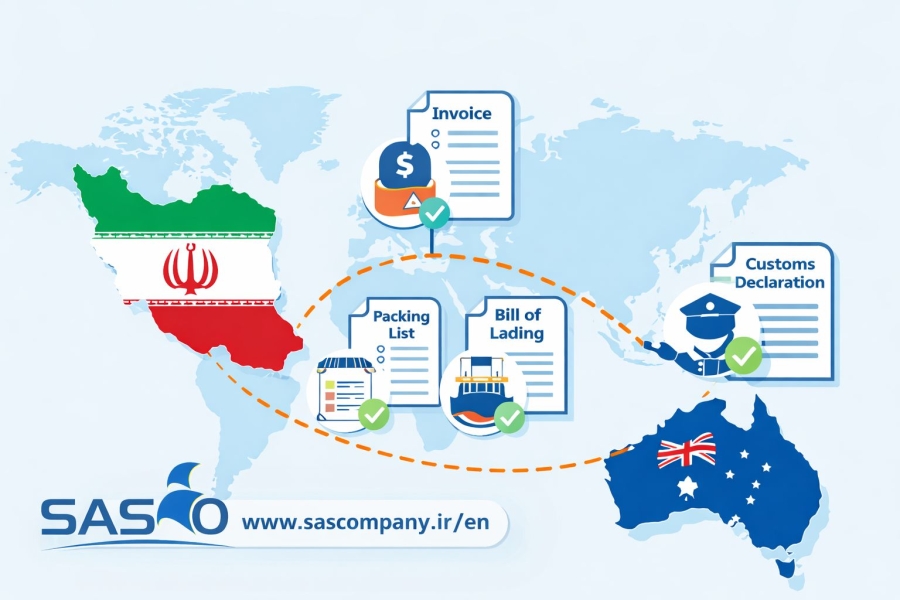
Required Documents at a Glance
|
Usually Required |
May Be Required Depending on the Shipment |
|
Commercial Invoice |
Import Declaration or SAC Declaration |
|
Packing List |
Packing Declaration |
|
Bill of Lading / Air Waybill |
Phytosanitary or Health Certificates |
|
Certificate of Origin |
Treatment Certificate for timber/bamboo packaging |
|
Dangerous Goods Declaration / SDS |
|
|
Permits or Approvals |
Tip: The exact documents needed to ship from Iran to Australia depend on the cargo type, packaging, shipment value, and Australian border requirements.
Why Documentation Matters for Shipments from Iran to Australia
For shipping from Iran to Australia, documentation is not just administrative paperwork. It is what connects the cargo, the booking, and the clearance process into one consistent shipment file. If the commercial invoice, packing list, cargo description, HS code, packaging statement, and carrier document do not match, the shipment can face avoidable delays before it even reaches the final release stage.
In practice, weak or inconsistent shipping documents from Iran to Australia can create problems at several points. A mismatch may affect vessel or airline booking, raise questions during customs review, trigger extra attention during biosecurity assessment, or slow down cargo release after arrival. This is why exporters should not treat documents as separate forms prepared one by one. They should be prepared as one coordinated set, with the same product details, weights, packaging information, and shipment terms across all paperwork. Strong document consistency reduces risk, supports faster processing, and makes the shipment easier to move without disruption.
Core Documents Required for Most Commercial Shipments
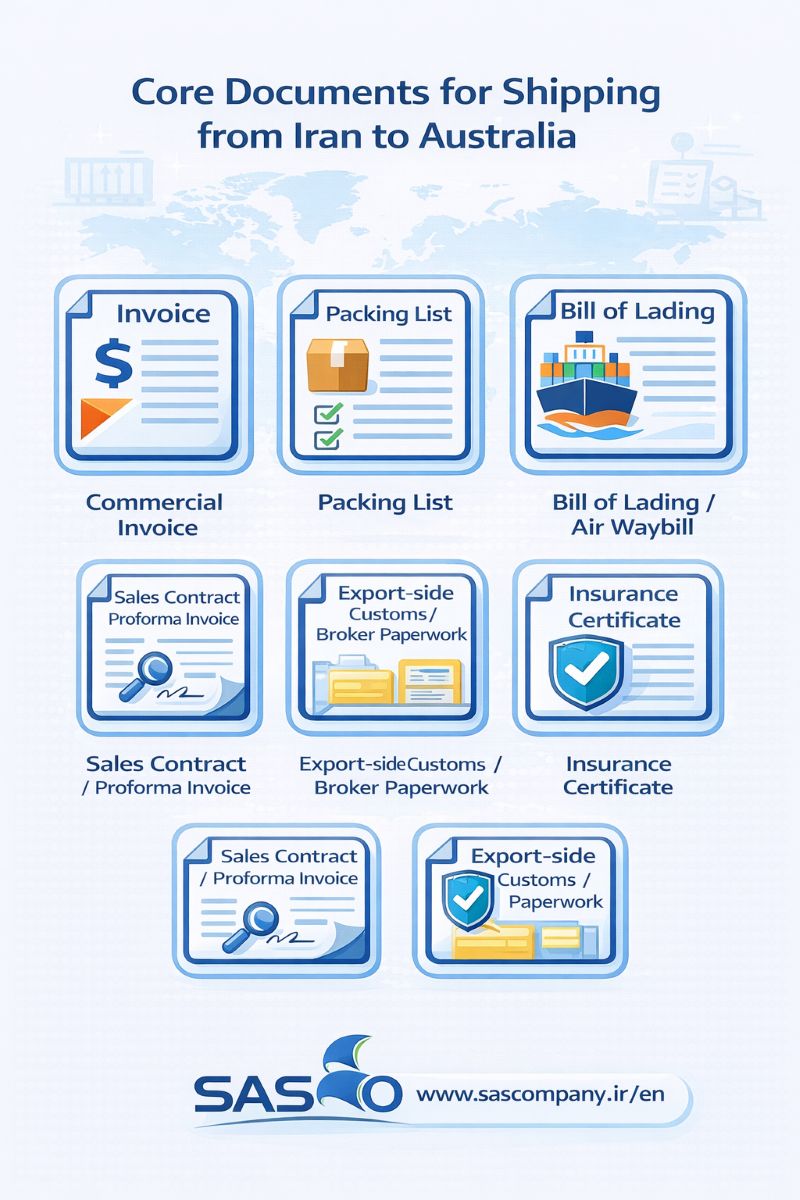
For most commercial shipments from Iran to Australia, a core set of documents is required before the cargo moves. These documents help confirm the value, contents, origin, transport details, and commercial basis of the shipment. If even one of them is incomplete or inconsistent, the result can be delays, document corrections, or clearance problems later in the process.
Commercial Invoice – This is the main sales and value document for the shipment, usually prepared by the exporter or seller. If the product description, value, or Incoterms are vague or inconsistent, the shipment can face customs questions, valuation review, or document mismatch.
Packing List – This document shows the physical details of the cargo, including quantities, weights, dimensions, and packaging type, and is normally prepared by the exporter or warehouse team. If it does not match the actual cargo or the invoice, booking, inspection, and release can all become slower.
Bill of Lading / Air Waybill – For a sea freight service, the Bill of Lading is the main transport document, while for an air freight service, the Air Waybill is used based on the shipper’s instructions. Errors in consignee details, cargo description, ports, or weight can lead to amendment costs, release delays, or problems linking the transport file to the customs file.
Certificate of Origin – This document confirms where the goods were produced and is usually issued through the Chamber of Commerce after the exporter applies for it. If origin details are missing or inconsistent, clearance can slow down and the shipment may face extra questions.
Sales Contract or Proforma Invoice – This is the commercial basis of the transaction before or alongside final invoicing, and it is usually prepared by the seller. If the agreed price, terms, or delivery conditions do not align with the final shipping file, payment, customs, and document consistency problems can follow.
Export-Side Customs or Broker Paperwork – These are the export filing and coordination documents handled by the exporter’s customs broker or freight forwarder. If the HS code, cargo description, or shipment data is incomplete, the export process can stall before departure.
Insurance Certificate – When insurance is required by the cargo type or Incoterms, this document serves as proof of coverage and is issued by the insurer or underwriter. If the insured value, risks covered, or shipment details are wrong, recovery after loss or damage becomes much harder.
Australia-Specific Documents and Declarations
Beyond the core export file, some shipments from Iran to Australia may require additional Australia-specific documents or supporting declarations. These requirements do not apply in exactly the same way to every cargo, but they become important when the goods, packaging, or import conditions trigger customs or biosecurity review.
For restricted or prohibited goods, the importer may need permits or approvals before clearance can move forward. Australia does not require a general import licence for every shipment, but some products are still subject to product-specific controls, permissions, or import conditions.
Some paperwork is also handled on the Australian side by the importer or customs broker. This usually includes the supporting documents used for the import declaration, along with any additional details requested during customs review.
Where packaging creates a biosecurity concern, the shipment may also need packaging or biosecurity statements. If timber or bamboo packaging or dunnage has been used, the importer may need supporting evidence, treatment details, or compliant marking, depending on the type of packaging and the import conditions that apply.
For plant, food, and agricultural-related cargo, phytosanitary, health, or other commodity-specific certificates may also be required. For dangerous or chemical goods, additional dangerous goods paperwork and safety documentation may be needed to support compliant transport and handling.
The main point is simple: standard export documents are only part of the file. For many commercial shipments from Iran to Australia, Australia-specific declarations and supporting documents are what help prevent border questions, biosecurity holds, and avoidable release delays.
Import Declaration vs SAC Declaration in Australia
For shipments from Iran to Australia, the type of import declaration depends mainly on the value of the goods. Higher-value shipments usually require a full Import Declaration, while lower-value shipments may follow a simplified SAC Declaration process.
This distinction matters because it can affect the level of documentation and review required during clearance. Exporters and importers should be aware of which declaration applies so that the supporting documents are prepared correctly.
Packing Declaration for FCL/LCL Shipments
For many containerised shipments from Iran to Australia (FCL or LCL), a packing declaration or equivalent packaging statement may be required. This document confirms whether the cargo has been packed with materials that could create a biosecurity risk, such as timber, bamboo, or other organic packaging components.
In practice, this information may appear on a standalone packing declaration or be included in the packing list or commercial invoice, depending on how the shipment file is prepared. The key requirement is that packaging-related information is clearly stated and consistent across documents.
Timber and Bamboo Packaging: ISPM 15 and Treatment Certificates
When timber or bamboo packaging is used (such as pallets, crates, or dunnage), Australian biosecurity rules become more relevant. Depending on the type of packaging, it may need to meet ISPM 15 requirements, including proper treatment and marking.
In some cases, supporting evidence such as a treatment certificate or compliant marking may be required to confirm that the packaging has been processed according to accepted standards. If this information is missing, unclear, or inconsistent with the shipment file, the cargo may be subject to inspection, treatment, or delays at the border.
For this reason, exporters should ensure that any wood-based packaging is properly documented and, where required, supported by the appropriate certification or marking.
Sanctions and Restricted-Goods Checks
For shipments from Iran to Australia, it is also important to consider whether the goods fall under any sanctions or restricted-goods controls. While this article focuses on documentation, these checks may still affect whether certain goods can be shipped or cleared.
In practice, exporters and importers should use an import & export consulting service to confirm that the cargo does not fall under restricted categories or require additional permissions before shipment. A more detailed review of sanctions and compliance requirements is covered separately.
Documents That Depend on Cargo Type
Not all documents needed to ship from Iran to Australia are the same for every shipment. The core file usually stays the same, but some supporting paperwork depends on what the cargo is, how it is packed, and whether Australian import or biosecurity controls apply to that product category. Australia does not require a general import licence for all goods, but some items still need permits, approvals, declarations, or extra supporting documents.
Food, dried fruit, and agricultural products often need closer attention because plant and food items can trigger Australian biosecurity conditions. Depending on the goods, the shipment may need phytosanitary, health, or other commodity-specific certificates, and the importer should check the relevant BICON conditions before cargo moves.
Machinery and industrial equipment may require additional supporting documents when the goods present a higher compliance risk or need more technical review. Depending on the equipment, importers may need extra product information, approvals, or evidence showing the goods meet Australian border requirements, so vague cargo descriptions should be avoided.
Dangerous or chemical goods usually require more than standard commercial paperwork. Depending on the transport mode and the exact classification, the shipper may need a dangerous goods declaration and supporting safety information so the cargo can be accepted, handled, and declared correctly.
Personal effects and commercial cargo should also not be treated as identical. Personal shipments may use a different declaration path or supporting document set, but private use does not automatically remove customs, permit, or biosecurity review, especially when value, product type, or import conditions trigger extra checks.
Document Consistency Checklist Before Shipping
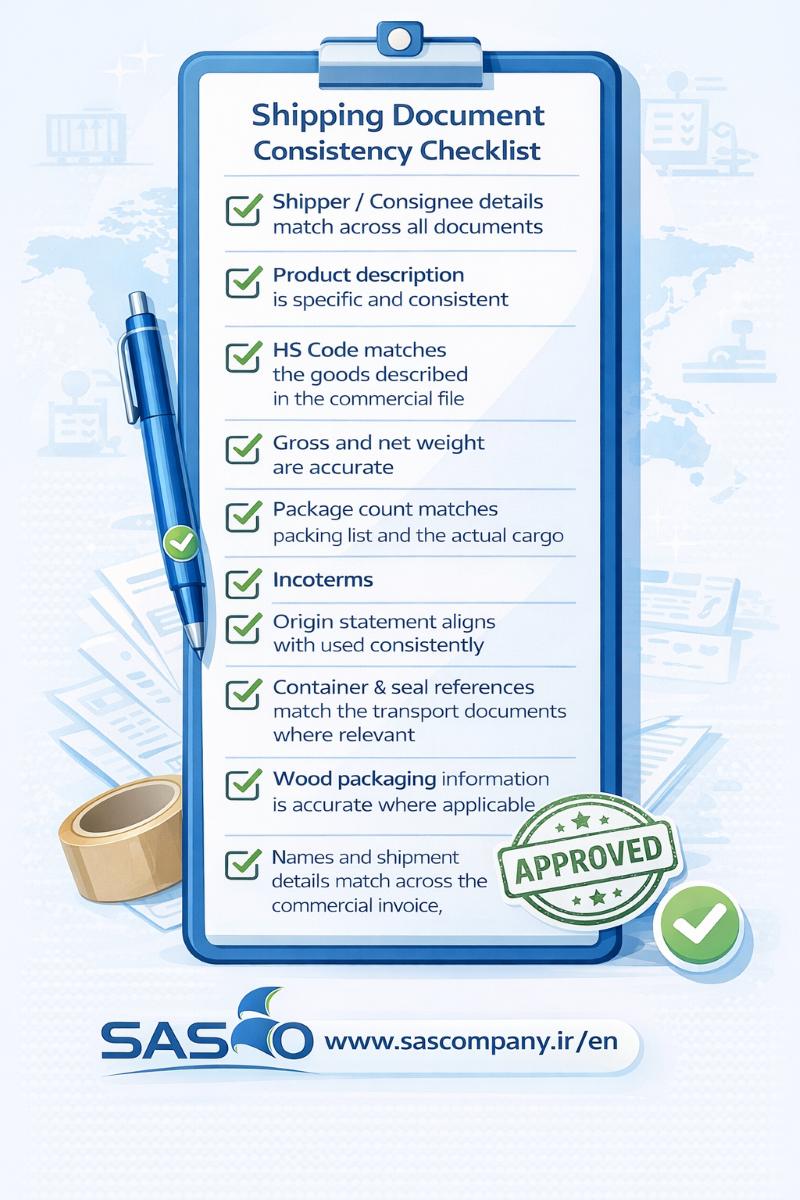
Before any shipment from Iran to Australia moves, the full document set should be reviewed as one coordinated file. Even small inconsistencies can lead to booking corrections, customs questions, biosecurity attention, or release delays.
Before shipping, check that:
- shipper and consignee details match across all documents
- product description is specific and consistent
- HS code matches the goods described in the commercial file
- gross and net weight are accurate
- package count matches the packing list and the actual cargo
- origin statement aligns with the certificate of origin
- Incoterms are stated clearly and used consistently
- container and seal references match the transport documents where relevant
- wood packaging information is accurate where applicable
- names and shipment details match across the commercial invoice, packing list, Bill of Lading or Air Waybill, and supporting certificates
In many cases, strong document consistency is what separates a smooth shipment from an avoidable delay.
Common Documentation Mistakes in Iran–Australia Shipments
Even when the main documents are prepared, avoidable paperwork errors can still slow down shipping from Iran to Australia. The most common mistakes include:
- the commercial invoice and packing list do not match
- the cargo description is too general or unclear
- the HS code does not match the goods being shipped
- required certificates are requested too late
- timber or bamboo packaging is not properly declared or supported by the right documentation
- the importer assumes no approval is needed
- the exporter assumes that no general import licence means no product-specific permission is required
These errors can lead to document amendments, customs questions, biosecurity issues, or avoidable delays during clearance.
Who Prepares Each Document?
In most shipments from Iran to Australia, the document file is not prepared by one party alone. Different documents are usually issued, prepared, or supported by different parties, which is why coordination matters as much as document availability.
- Exporter – usually prepares the commercial invoice, packing list, and, where relevant, the sales contract or proforma invoice. If these documents are incomplete or inconsistent, the rest of the shipment file can quickly become unreliable.
- Freight forwarder or carrier – usually issues the Bill of Lading or Air Waybill based on the shipment instructions received. At this stage, accurate transport details, consignee information, cargo description, and routing are especially important.
- Chamber of Commerce – usually issues the Certificate of Origin after the exporter submits the required supporting documents. This certificate should align with the commercial and transport file.
- Inspection body – may issue an inspection certificate or similar supporting document if the buyer, cargo type, or transaction requires third-party verification.
- Customs broker – usually handles the export-side customs paperwork in Iran or the import declaration support file in Australia, depending on who has been appointed for the shipment. A customs clearance service can also help reduce errors in declaration-related paperwork and support smoother release.
Although different documents are prepared or issued by different parties, many businesses still rely on an experienced freight forwarder to help coordinate the full paperwork flow. In practice, SASCO can help review document consistency, follow up with the relevant parties, and reduce the risk of missing or mismatched paperwork before the shipment moves. For Iran–Australia shipments, this kind of coordination can make the process smoother, faster, and more predictable.
Final Pre-Shipment Document Checklist
Before cargo moves, make sure the shipment file is complete and ready for action. A final review can help reduce document gaps, prevent avoidable delays, and support smoother clearance after arrival.
Before shipment, confirm that:
- commercial documents are complete
- the Bill of Lading or Air Waybill draft has been checked
- permits or approvals have been confirmed where relevant
- packaging or biosecurity-related evidence is ready where applicable
- the cargo description is aligned across all documents
- the importer or customs broker has the full document set before shipment moves
A short final check before departure can prevent much larger problems later in the shipping process.