


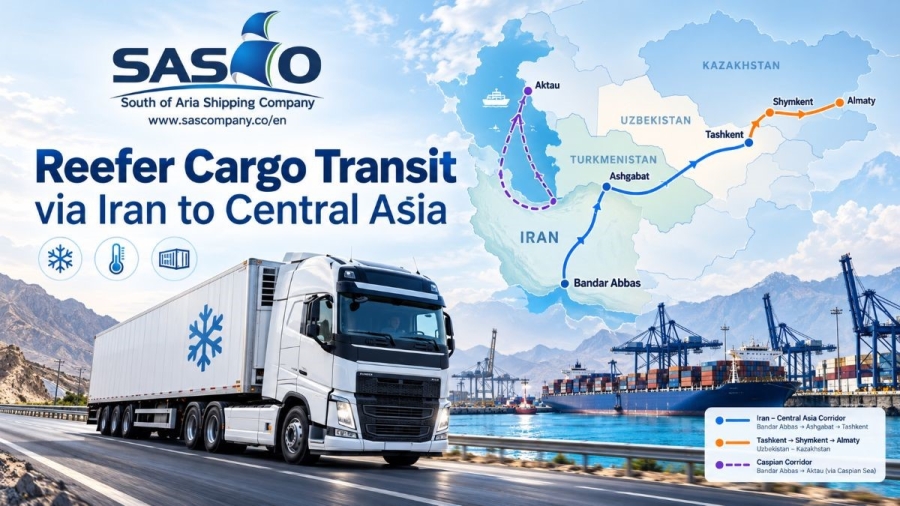
Reefer Cargo Transit via Iran at a Glance
For temperature-controlled shipping to Central Asia, the best route is not necessarily the shortest one. Refrigeration must be maintained during port handling, inland movement and border handovers, with equipment selected for the specific commodity.
SASCO plans transit through Iran around the entry point, destination, reefer power requirements and available transport connections. For reefer container transit via Iran, the operating plan should clarify power supply at each stage, inspection points and whether cargo transfer is required.
|
Item |
Planning Overview |
|
Main Entry Points |
Bandar Abbas for sea arrivals; Iranian land borders for overland shipments |
|
Key Destinations |
Uzbekistan, Turkmenistan and Kazakhstan |
|
Transport Options |
Refrigerated trucks and reefer containers by road; rail or multimodal options subject to service and power availability |
|
Temperature Control |
Commodity-specific setpoint, continuous power planning and temperature monitoring |
|
Main Transit Risks |
Port delays, border waiting, power interruptions and cargo transfers |
|
Freight Cost Basis |
Origin, destination, equipment, cargo requirements, reefer power costs and delivery scope |
Main Reefer Cargo Transit Routes from Iran to Central Asia
Refrigerated routes through Iran depend on the entry point, final delivery city, border permits and availability of suitable vehicles. Bandar Abbas can serve sea arrivals when carrier and port conditions permit, while cargo entering Iran by road may follow different inland connections. For temperature-sensitive shipments, reliable refrigeration matters as much as distance.
Reefer Transport to Uzbekistan via Iran
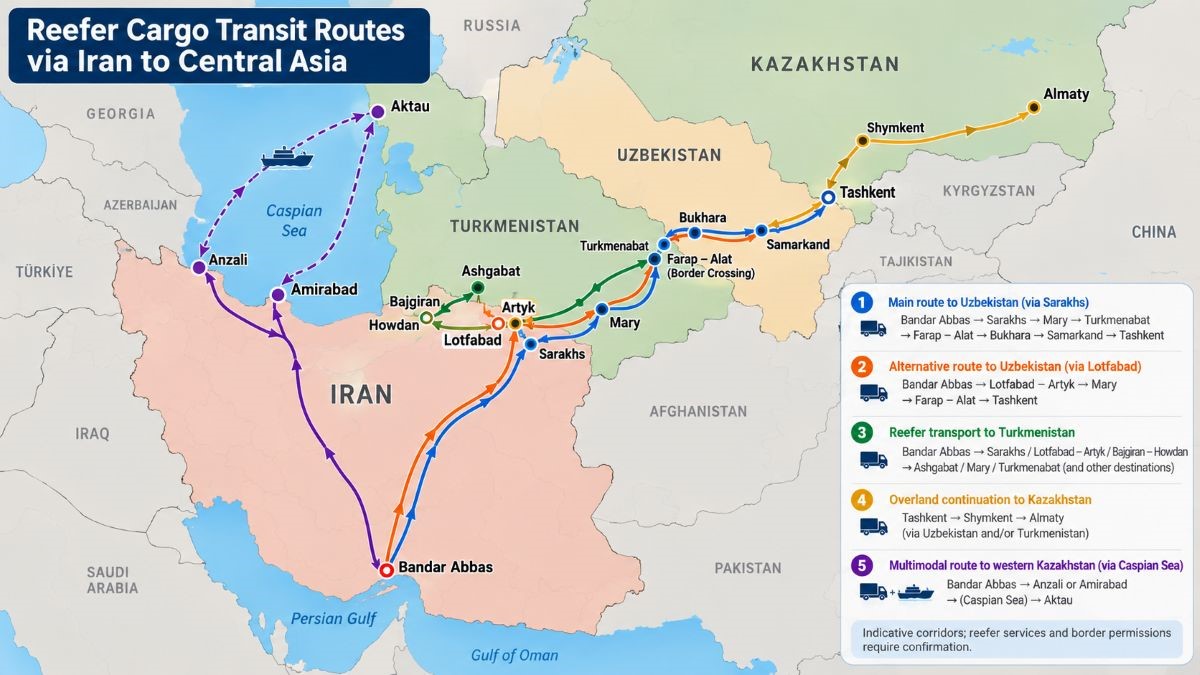
Uzbekistan does not share a border with Iran, so refrigerated transport to Uzbekistan normally passes through Turkmenistan. A principal route is Bandar Abbas → Sarakhs → Turkmenistan → Farap–Alat → Tashkent. The shipment crosses the Iran–Turkmenistan border at Sarakhs, then enters Uzbekistan through Farap–Alat.
For Bandar Abbas to Uzbekistan reefer transport, Lotfabad–Artyk offers another road crossing when vehicle arrangements, permits and the destination support it. Before dispatch, SASCO checks the proposed border handovers, possible trailer changes and refrigerated-equipment requirements.
Refrigerated Cargo Transport to Turkmenistan
Sarakhs and Lotfabad–Artyk are key gateways for road freight to Turkmenistan, including suitable refrigerated shipments toward Ashgabat, Mary and Turkmenabat. Bajgiran–Howdan may also be considered for selected destinations, depending on operating conditions.
A refrigerated truck from Iran to Turkmenistan requires compatible vehicle arrangements, driver documentation and applicable transit permissions. Access for a specific truck or refrigeration unit cannot be presumed. We select the crossing based on the consignee’s location, available transport capacity and the ability to protect cargo during border inspections and waiting periods.
Reefer Cargo Transit to Kazakhstan
For Shymkent and Almaty, road transit to Kazakhstan with suitable refrigerated equipment may pass through Turkmenistan and, where appropriate, Uzbekistan. This route requires coordination of border permissions, trucking arrangements and delivery schedules across the countries involved.
For western Kazakhstan, another option combines inland transport across Iran to Anzali or Amirabad, a Caspian Sea crossing to Aktau, and onward delivery. Reefer cargo shipping to Kazakhstan on this route is feasible only if the selected vessel and terminals accept refrigerated containers and suitable power arrangements are confirmed throughout the journey. The availability of ordinary container transport on the Caspian does not establish reefer availability.
Kyrgyzstan can be assessed through Uzbekistan or Kazakhstan, while Tajikistan may be reached through Uzbekistan. Both require separate confirmation of border arrangements and refrigerated-vehicle availability.
Reefer Truck vs. Reefer Container: Which Is Better?
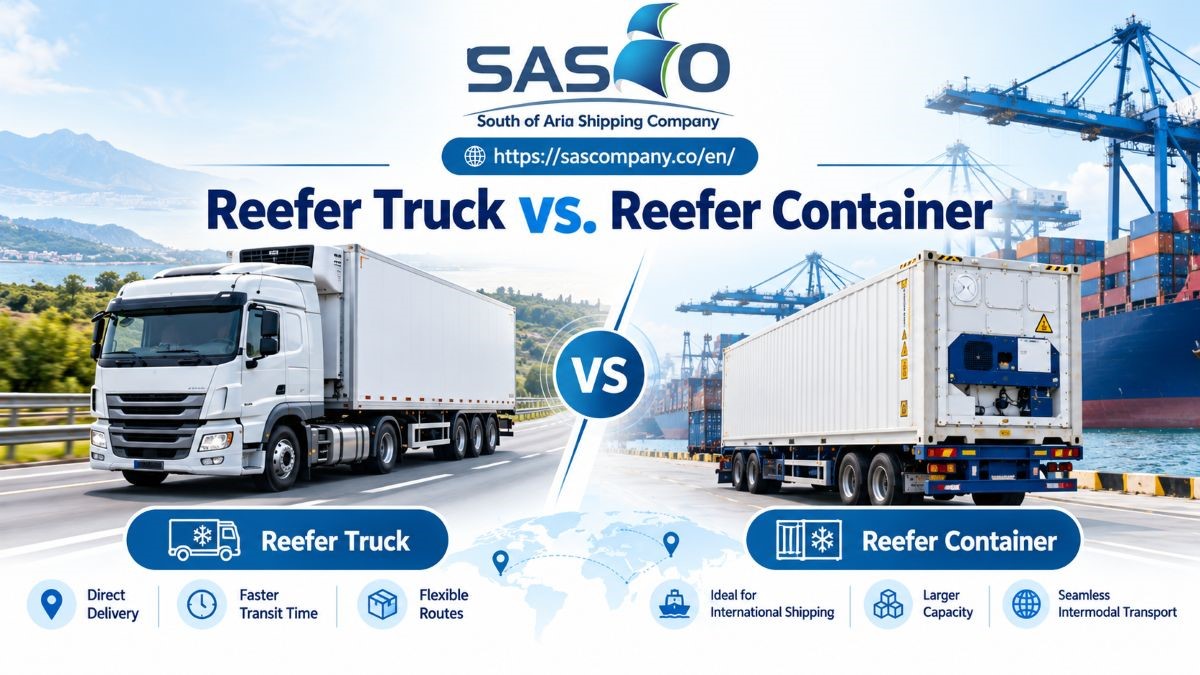
Refrigerated trucks and reefer containers both protect temperature-sensitive cargo, but their operating arrangements differ. A reefer container is simply a refrigerated container; the two terms refer to the same temperature-controlled shipping equipment. A refrigerated truck, by contrast, has its own refrigeration unit and is often suitable for road freight transport in Iran and direct cross-border delivery when border permits and suitable vehicles are available.
For sea-to-land shipments arriving at Bandar Abbas, a reefer container can remain sealed while being transferred onto a suitable trailer. Its refrigeration unit needs a confirmed power source at the terminal and during inland movement, generally a compatible genset when external electricity is unavailable.
|
Transport Method |
Best For |
Main Consideration |
|
Refrigerated Truck |
Direct regional delivery |
Border permits and vehicle availability |
|
Reefer Container + Truck |
International sea–land shipments |
Genset, fuel and port power |
|
Reefer Container + Rail |
Suitable containerized corridors |
Reefer power, terminal capability and rail acceptance |
Rail transport is an option only when the operator confirms reefer acceptance and continuous power arrangements. The choice should account for cargo sensitivity, transfers, border procedures and total cost. See the 40ft refrigerated container specifications for equipment details.
Temperature Control During Reefer Transit via Iran
Reliable cold chain logistics in Central Asia starts before loading and depends on power, air circulation and documented checks at every handover. The required temperature and handling plan should follow the commodity's specifications, not a single standard setting for all cargo.
Pre-Cooling, Setpoints and Cargo Loading
Cargo should be cooled to its prescribed carriage temperature before loading. A reefer unit is primarily designed to maintain product temperature, not rapidly chill warm goods. Before dispatch, verify the pre-trip inspection (PTI), unit condition, cleanliness and appropriate temperature, ventilation and humidity settings.
Pre-cooling an empty container is not always suitable, particularly when doors remain open in warm, humid conditions. Packaging and stowage must allow airflow: keep floor channels clear and avoid loading above the marked limit. Incorrect stacking may create warm spots even when the machinery operates normally. See Hapag-Lloyd's reefer cargo-handling guidance.
Reefer Power Supply and Genset Planning
Reefer container power supply during transit must be arranged separately for port storage, road transport and intermediate stops. At Bandar Abbas, confirm whether terminal plug-in points are available and who is responsible for connection and monitoring. On the road, a container normally needs a compatible genset when external power is unavailable; refrigerated trucks have their own refrigeration systems.
The power plan should cover generator compatibility, fuel reserves, refuelling access, alarms and backup arrangements. Border waiting at Sarakhs or Lotfabad–Artyk may last longer than expected, so there must be a procedure for checking the refrigeration unit and restoring power if interrupted. Rail transport requires separate confirmation of reefer power and terminal support.
Temperature Monitoring at Borders and Handover Points
Temperature data loggers can record time-stamped readings, while reefer controllers store setpoints, air temperatures and alarms. Recorded air temperature does not necessarily represent the temperature inside the product; sensitive goods may require additional probes. Real-time alerts are possible only when suitable monitoring equipment and connectivity are provided.
At port release, border inspection, trailer changes and delivery, record the equipment ID, seal condition, setpoint, unit status and handover time. If a temperature excursion occurs, the agreed response should identify the duration and severity, restore cooling, notify the responsible parties and assess cargo condition before acceptance. These records help resolve quality concerns and clarify responsibility across successive carriers.
Reefer Cargo Transit Time to Central Asia
The following ranges are preliminary planning estimates for the inland refrigerated road leg from Bandar Abbas after port release. They are not guaranteed transit times and should be confirmed for the selected truck, border crossings and refrigeration arrangements.
|
Destination |
Main Route |
Indicative Transit Time |
Main Delay Risk |
|
Turkmenistan (Ashgabat) |
Sarakhs or Lotfabad–Artyk |
6–12 days |
Border permits and truck availability |
|
Uzbekistan (Tashkent) |
Sarakhs–Turkmenistan–Farap–Alat |
9–16 days |
Two border crossings and equipment handovers |
|
Kazakhstan (Shymkent / Almaty) |
Via Turkmenistan and, where appropriate, Uzbekistan |
11–18 days to Shymkent; 13–21 days to Almaty |
Additional border checks and delivery distance |
The clock starts when cargo is released and ready for inland dispatch, not when the vessel arrives at Bandar Abbas. Shipping time to Iran, port dwell and unforeseen inspections must be considered separately. Reefer movements can take longer than comparable dry-container shipments when genset refuelling, temperature checks or controlled transfers are needed.
All estimates depend on route-specific confirmation before booking.
Reefer Cargo Transit Costs via Iran
The ranges below are preliminary budgeting scenarios for one 40-foot reefer container on a road trailer from Bandar Abbas. They are working estimates, not confirmed or bookable freight quotations.
|
Inland Route |
Indicative Reefer Road Budget |
|
Bandar Abbas–Ashgabat |
USD 2,800–4,300 |
|
Bandar Abbas–Tashkent |
USD 3,500–5,200 |
|
Bandar Abbas–Shymkent |
USD 4,200–6,500 |
|
Bandar Abbas–Almaty |
USD 4,800–7,500 |
These figures provisionally allow for refrigerated road transport and routine power support, subject to equipment availability. They exclude international ocean freight, port charges, insurance, exceptional border delays, import duties and destination customs clearance.
What Affects Reefer Transport Costs?
|
Cost Component |
When Applicable |
|
Ocean reefer freight |
If arriving by sea |
|
Port handling and reefer plug-in |
Discharge and port storage |
|
Inland refrigerated transport |
Road delivery |
|
Genset and fuel |
Powered container trucking |
|
Border waiting and transit fees |
Cross-border movement |
|
Temperature monitoring |
If included in service scope |
|
Transloading or cold storage |
When cargo transfer is required |
|
Insurance and equipment return |
As applicable |
Reefer charges differ from standard 40HC dry-container rates. Power continuity, fuel consumption, border waiting and return arrangements can materially change the delivered cost. A Caspian service to Aktau should not be priced until reefer acceptance and power arrangements are verified.
How to Get an Accurate Reefer Freight Quote
Provide the origin, destination, commodity, temperature range, cargo weight, container or truck type, cargo-ready date and Incoterm. Confirm whether the offer includes the genset, port electricity, transit documentation, border handling, monitoring and delivery.
The final rate and transit schedule must be confirmed against the actual route, equipment and shipping date. Request a reefer freight quote.
Customs and Documents for Refrigerated Cargo Transit
Refrigerated cargo customs documents should be checked before dispatch, since missing permits can leave temperature-sensitive goods waiting at ports or borders. Most movements require a Commercial Invoice, Packing List and the applicable Customs Transit Declaration. A TIR Carnet may be used for eligible TIR transit movements, while road shipments may require a CMR consignment note where applicable; rail or sea legs require the corresponding transport document.
For agricultural and animal-origin cargo, Phytosanitary or Veterinary Certificates may be required. Where demanded by the shipper, authority or consignee, retain temperature monitoring records, seal details and reefer setpoint logs to document handling throughout the journey.
Destination-country import rules govern the final document set: food consignments may need sanitary certificates, whereas pharmaceuticals can require product-specific approvals and controlled-distribution records.
For certain international movements of perishable foodstuffs, the ATP agreement establishes requirements for equipment and temperatures. Applicability depends on the countries, carriage and cargo concerned; check the current UNECE ATP text and contracting-party status before relying on it.
Main Risks in Reefer Transit via Iran
Four risks require particular attention in reefer transit via Iran. Power interruption can cause temperature loss: confirm terminal plug-ins, a compatible genset or backup source, and who reconnects the unit after handover.
Border delays can exhaust fuel reserves and disrupt delivery. Build in waiting time and plan refuelling, monitoring and driver support. Temperature excursions require logged readings, an escalation contact and procedures for restoring cooling and assessing cargo condition.
Port or route disruption may block the intended shipment. Verify vessel acceptance, border access and feasible alternatives before confirming departure.
Route Conditions — Updated October 2026: Maritime security risks around the Strait of Hormuz have intensified, with attacks on commercial vessels reported on 14 October by Reuters. For shipments arriving by sea at Bandar Abbas, check current carrier operations, insurance, sailing schedules and cargo acceptance. This dated advisory should be reassessed for each booking.
Why Choose SASCO for Reefer Cargo Transit via Iran?
SASCO combines Iranian customs-transit and border coordination with temperature-controlled shipment planning. Operations are assessed by route, commodity, vehicle availability and the ability to maintain power or refrigeration during transfers.
A documented cold-chain project involved exports of Iranian dates and kiwifruit to Canada. Produce from Anzali and Kerman travelled in refrigerated equipment via the Bazargan border to the Port of Mersin in Türkiye. The cargo was transferred into reefer containers for sea transport to Montreal and moved onward by rail in Canada.
The project demonstrates practical coordination across refrigerated road transport, cargo transfers, ocean freight and rail. For Central Asian shipments, equipment access, border permissions and temperature protection still require route-specific confirmation.
Frequently Asked Questions
How much does reefer cargo transit through Iran cost?
For a preliminary 40-foot reefer road budget from Bandar Abbas, working estimates are USD 2,800–4,300 to Ashgabat and USD 3,500–5,200 to Tashkent. These unverified ranges exclude international sea freight and port charges and require SASCO confirmation.
Can reefer containers move from Bandar Abbas to Uzbekistan?
Potentially, via Sarakhs and Turkmenistan to the Farap–Alat border. Before booking, confirm container and chassis acceptance across borders, genset power, and any shipping-line restrictions on inland movement and empty return.
How is temperature maintained during border delays?
Plan sufficient generator fuel or another approved power source for extended queues, check alarms and temperature logs, and assign responsibility at each handover. If cooling is interrupted, restore power promptly and document any temperature deviation.
Is reefer trucking or container transport better for Central Asia?
Refrigerated trucks suit direct road delivery when permits and vehicles are available. Reefer containers can simplify sea–land transfers without unloading cargo, provided power and handling arrangements are confirmed. Neither method is automatically faster or cheaper.
What information is needed for a refrigerated freight quote?
Provide origin, destination, commodity, weight, packaging, temperature range, equipment type, cargo-ready date and Incoterm. Include special ventilation, monitoring or unloading needs so the quotation specifies all inclusions, exclusions and responsibilities.
Request a Reefer Cargo Transit Quote from SASCO
Planning refrigerated freight to Uzbekistan, Turkmenistan or Kazakhstan via Iran? Send SASCO your origin, final destination, commodity, required temperature range, gross weight, preferred truck or reefer container, and cargo-ready date. Include your Incoterm and any monitoring requirements. Request a shipping quote for route-specific costs, transit timing and equipment availability.